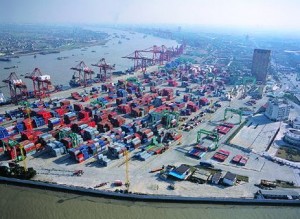
Air Freight vs Ocean Freight

Air Freight vs Ocean Freight for Exporters: Which Should You Choose?

Choosing the right mode is one of the biggest decisions in international exporting. The best option depends on your product type, delivery timeline, shipment size, budget, and risk tolerance. In this guide, we break down air freight vs ocean freight for exporters—especially ecommerce brands and distributors—so you can ship globally with fewer delays and lower landed cost.

If you want expert help selecting the fastest, safest, and most cost-effective export option, start with our Export Freight Services.


Quick Comparison: Air Freight vs Ocean Freight

  • Speed: Air is fastest; ocean is slower but efficient for large volumes.
  • Cost: Ocean is typically lower cost per unit; air costs more but can reduce stockouts.
  • Best for: Air = urgent/high value; Ocean = heavy/bulky/high volume.
  • Risk exposure: Ocean can face port congestion and longer dwell times; air can face capacity shifts.

When Air Freight Makes Sense for Exporters

Air freight is ideal when time matters more than cost. Exporters commonly use air for:

  • Urgent replenishment to prevent stockouts
  • High-value or lightweight products where speed protects margins
  • New market launches when demand is uncertain
  • Seasonal peaks where late inventory equals lost revenue

Air Freight for Ecommerce Exporters

Ecommerce brands often choose air to keep overseas fulfillment inventory in stock. Even if air costs more, the real question is whether ocean delays would cause missed sales, lower seller ratings, or paid-ad waste.


When Ocean Freight Makes Sense for Exporters

Ocean freight is the go-to option when you need cost efficiency for larger shipments. Exporters commonly choose ocean for:

  • Bulk replenishment for distributors or overseas warehouses
  • Heavy or bulky products where air cost is prohibitive
  • Stable demand where longer planning windows are acceptable
  • FCL and LCL shipments to match volume and budget

FCL vs LCL (Exporters’ Shortcut)

  • FCL (Full Container Load): Best when you can fill a container or want dedicated space.
  • LCL (Less-than-Container Load): Best when you have smaller volume and want to share container space.

The Hidden Factor: Total Landed Cost

Exporters often compare only the freight rate, but the smarter metric is total landed cost, which includes:

  • Freight charges
  • Handling and port/terminal fees
  • Documentation and compliance costs
  • Insurance options
  • Inventory carrying cost (cash tied up during transit)
  • Stockout risk and revenue loss

In many cases, air freight can be “more expensive” on paper but cheaper in real business impact if it prevents stockouts.


How International 3PL Helps You Choose the Right Export Mode

As a freight-forwarding operator, International 3PL helps exporters choose the right mode based on timeline, cargo, budget, and risk. We coordinate routing, carrier selection, export documentation, and shipment visibility through a single process.

Learn more about our end-to-end approach on our Freight Forwarding Services page, or go directly to Export Freight Services to get live assistance.


Frequently Asked Questions

Is air freight always faster than ocean freight?

Generally yes, but actual delivery time depends on pickup readiness, airport/port operations, carrier schedules, and destination handling. Air is usually best when days matter.

Is ocean freight always cheaper than air freight?

Ocean is typically cheaper per unit for large shipments, but the total business cost can favor air if ocean timing creates stockouts, missed launches, or lost sales.

What’s better for ecommerce exports?

Many ecommerce exporters use a hybrid approach: air for urgent replenishment and ocean for bulk restock—based on demand planning and margin.

Should I choose FCL or LCL for ocean exports?

Choose FCL when volume is high or you want dedicated space. Choose LCL when volume is smaller and you want to share container space.

What info do you need to recommend air vs ocean?

Origin, destination, cargo details (weight/dimensions), shipment value, timeline, carton/pallet counts, and special handling requirements.
3PL, 4PL & 5PL Explained

What is 5PL? What is the difference between 3PL, 4PL and 5PL. You might be unclear on what each level of logistics services entails.

The role of outsourced logistics in the supply chain hasn’t been fully explained. It is still unclear what level of services the 3 different PL’s offer.

Supply chain and the logistics industry are getting complicated. Increasing customer expectations, growth in e-commerce, and new business models lead to more pressure applied to the supply chain channels. Businesses have to do a lot to manage their logistics. There is hardly any room for error.

What is A 3PL?

A 3PL (third-party logistics provider ) offers outsourced logistics services, which includes anything that involves management of one or more aspects of procurement and fulfillment activities. In business, 3PL has a broad meaning that applies to any logistic service that involves storing, fulfilling or shipping items. Most 3PL’s are asset based while 4PL’s and 5PL’s are not. Many companies who provide multiple types of services call themselves 3PL Companies for examples, a Freight Forwarder who handles storage and some distribution can claim that they are a 3 PL. The same applies to Trucking companies who handle storage, they too can claim to be a 3PL. It has to be noted that not all 3PL’s are created equal. To be a true 3PL, you have to offer many services under the logistics Umbrella.

What is A 4PL ?

4PL ( fourth-party logistics ) is a more sophisticated form of supply chain management, focusing on the optimization of the whole logistics process.

While some 4PLs perform similar functions to 3PLs, they are usually non-asset based, meaning they don’t own any vehicles or storage facilities themselves.

A 4PL may coordinate the activities of 3PLs that handle specific parts of the supply chain. There is no set structure for a 4PL, and some larger 3PLs may even offer 4PL solutions to their clients.

What is a 5PL ?

5PL is a relatively new term in the logistics industry and reflects the development of full logistic integration through many outsourced providers.  encompass the whole supply chain from beginning

A 5PL provider looks beyond individual supply chains, focusing instead on wider supply networks.

A 5PL will plan, organize and implement a client’s logistics solutions, taking all elements of supply chain management out of their hands. Their focus on supply networks means they’ll oversee every single supply chain within an organization.

5Pls tend to be more valuable to e-commerce businesses with AI implementations. 5PL Firms Manage Multiple 3PL and 4PL Companies

Why supply chain disruptions cause inflation

Supply Chain Disruptions cause Inflation. Contrary to what some news media report, shortages and disruptions mean fewer items available for purchase , consumers are willing to pay more to obtain the item—as outlined in the economic principle of supply and demand. The result is higher prices due to demand-pull inflation.
Inflation reflects the wide range rise of prices or the fall in the value of money. It generally results from too much demand chasing too few goods or limited services, leading to price increases. Inflated prices don’t necessarily hurt the economy as a whole, and only those consumers making purchases experience the increase. As we all know that was the case during 2020 and 2021 where COVID interrupted many delivery services of many products.
In the short term, high inflation can be the result of a hot economy — one in which people have a lot of surplus cash or are accessing a lot of credit and want to spend. If consumers are buying goods and services eagerly enough, businesses may need to raise prices because they lack adequate supply. This was the case in 2020 and 2021.

Causes of inflation:

There are three main causes of inflation: demand-pull inflation, cost-push inflation, and built-in inflation. Demand-pull inflation refers to situations where there are not enough products or services being produced to keep up with demand, causing their prices to increase.

Demand-Pull Effect

Demand-pull inflation occurs when an increase in the supply of money and credit stimulates overall demand for goods and services in an economy to increase more rapidly than the economy’s production capacity. This increases demand and leads to price rises. Add  to that purchasing of goods driven by fear of shortages and lack of products.

Cost-Push Effect

Cost-push inflation is a result of the increase in prices working through the production process inputs. When additions to the supply of money and credit are channeled into a commodity or other asset markets and especially when this is accompanied by a negative economic shock to the supply of key commodities, costs for all kinds of intermediate goods rise. In 2020 and 2021 the cost of the final product increased due to lack of rack material or what we call upstream supply chain disruptions.

Built-in Inflation

Built-in inflation is related to adaptive expectations, the idea that people expect current inflation rates to continue in the future. As the price of goods and services rises, workers and others come to expect that they will continue to rise in the future at a similar rate and demand more costs or wages to maintain their standard of living. Their increased wages result in a higher cost of goods and services.

Understanding Supply Chain disruptions

Before the COVID-19 pandemic, many people did not know what supply chain really meant. Many people didn’t and still don’t fully understand the meaning of logistics. They think of logistics as only shipping. Today, manufacturers, warehouses, transportation providers, distribution centers, and retailers are all topics of mainstream media. Times are changing—so is the supply chain.

” Material shortages overtook COVID-19 as the top supply chain disruption in 2021. 75% of companies experienced external disruptions in 2021, and 56% say that 2021 brought more disruption than 2020. 98% of companies believe measures should be taken to avoid future supply disruptions, but only 63% have done so to date.”

What are the major supply chain issues?
Top Supply Chain Challenges for Shippers
  • Keeping transportation costs down.
  • Keeping up with customer/industry demands.
  • Sourcing consistent, reliable carrier capacity.
  • Keeping up with the latest technology solutions and demands.
  • On-time pickup and delivery performance.

Most likely, supply chain disruptions will continue but companies can use the opportunity to redesign processes and update technology to solve long-term issues. Supply chain disruption will continue to affect businesses in 2022 but will also open up opportunities to resolve long-standing weaknesses.

Resources

3pl Companies in Miami

Freight Forwarders in Miami

Omnichannel Fulfilment

How to Reduce Freight Cost

Freight cost, sometimes, make up a large portion of the total cost of a product specially when it comes to low value and high weight products.  For example, if you are importing ceramic tile, the freight cost alone could make up over 50% of the price of the product.

How can you save on Freight Cost?

There are several ways you can save on freight depending on the mode of transportation.

1- Ocean Freight: If you are shipping a container, make sure to maximize the load as long as you do not exceed the maximum weight allowed. Also, if you are shipping a container of heavy, low value products, try to add a high value product in the same container and off course negotiate the best rates with the Freight Forwarder

2- Air Freight: Make sure you do not ship half full boxes; you will be paying for air. Consolidate items into a little number of boxes as possible.

Do not Mix dangerous goods with non-Dangerous goods in the same shipment, you will be paying the rate applicable to DG goods which is the highest

3- Inland Transportation

A- If you are shipping a full truck, fill it up to the max weight, Choose the best Inland Transportation Company.

B- For LTL shipments, make sure you use the right NMFC Classification. The higher the classification, the more you pay. Once again, do not ship half full boxes.

4 – Courier Shipping; When shipping Via UPS, FedEx or USPS make sure to use the smallest size box as they charge based on what will net more revenue which is weight or volume. Refer to Dim weight calculation. Shipping a pillow that weighs 5 lbs. will cost you more than a computer that weighs 5 lbs. since the pillow shipping cost will be charged based on dim weight.

If you are an importer, make sure you use the correct harmonized Tariff Code , there is no need to pay  more in duties than you have to, remember to do your research and get the best shipping rates without compromising service


Resources:

International shipping rates

Ocean Freight rates


Request a freight Quote

The future of freight forwarding

When do you think about freight forwarding? I hardly believe you think of it when you pick up a toy or a toaster oven from your local store. There is a 90% chance that a freight forwarder was involved somewhere to bring the product to your fingertips.

A freight forward is an important part of the supply chain. Now let’s describe the role of the freight forwarder; It’s basically an organization that uses the services of a shipping company or air cargo company to move cargo from point A to point B. Anywhere in the world a freight forwarder does not own the vessel or aircraft although some shipping companies are freight forwarders.

A freight forward is involved in multi-modal transportation, for example: a shipment of microwaves from the factory in China to London will involve inland transport from a factory to the airport or shipping port and once the cargo arrives in London, it will be transported by truck (Inland Transportation) to the final destination.
Freight forwarders are subject to regulations that vary by country. This makes freight forwarding a tricky business.

Years ago, freight forwarders offered limited services, they only focused on shipping, with time they started offering services such as custom clearance, warehousing, consolidation and other services. Some of these services were outsourced. This has given rise to third-party logistics companies (3PL companies).

Freight forwarders that have not adopted innovation in the past few years are experiencing a slowdown business.
The industry has changed a lot over the past 20 years. A forwarder has become a one stop shop for all our logistics needs. This came with opportunities and challenges.
As a Freight forwarder adds on services, they need to add new talent. People who have experience in packaging, order fulfillment and customer service.

Many freight forwarders try to shed their skin and put on the Logistics Provider skin with little services because basically they focus on freight forwarding, their core competency.

In this challenging market so many freight forwarders are fading because they have not adopted change and innovation. We will continue to witness the change and evolution in this industry.
The next time you pick up your blender or coffee maker, remember how much work was involved.

Selecting A Third Party Logistics (3PL) Provider

Third party logistics providers (3PL) are a becoming an important part of today’s supply chain. These companies offer services that can allow businesses to outsource part or all of their supply chain management activities. Many 3PL companies offer a wide range of services including; inbound freight, freight consolidation, warehousing, distribution, order fulfillment and outbound freight.
many freight forwarding companies have evolved into third party logistics companies in order to be able to attract more businesses by introducing value added services which they outsource themselves to other providers.

The growth of 3PL companies has been driven by the need for businesses to become leaner, more efficient reducing assets and allowing focus on core business processes.

Third Party Logistics Providers

Selecting A Third Party Logistics Provider

Deciding to a use a third party logistics company is a decision that depends on a many of factors that differ from business to business and from location to location. The decision to outsource certain business functions will depend on the company’s plans; future objectives, product lines, expansion, acquisitions, etc.

Once a decision has been made to outsource certain processes then a company will begin a search for the right 3PL that fits all their requirements at the best possible price. There are three types of Third Party Logistics Providers or companies that operate today.

  • Asset Based
  • Management Based
  • Integrated Providers

Asset based third party logistics companies use their own trucks, warehouses and personnel to operate their business. Management based companies provide the technological and managerial functions to operate the logistics functions of their clients, but do so using the assets of other companies and do not necessarily own any assets. The third category, Integrated Providers, can either be asset based or management based companies that supplement their services with whatever services are needed by their clients.

When selecting a 3PL, the request for information (RFI) or quotation (RFQ) should be as detailed as possible. The company that is selected should be able to fulfill all the logistics requirements and that can only be assured if every requirement is communicated to potential companies. The RFI should include a detailed description of the areas to be outsourced. This will usually include:

  • The scope of the contract, including locations, facilities, departments.
  • Information on volumes involved; number of deliveries, warehouse sizes, number of items, etc.
  • The logistics tasks are to be performed, e.g. warehousing, transportation, etc.
  • The level of performance required.

After the bids have been received by a company from the prospective third party logistics providers, an evaluation would take place where a multi-discipline team will review each bid based on a pre-defined set of criteria. These will include some of the following.

  • Does the 3PL provide the services required?
  • Does the 3PL have the technology required to perform the tasks required?
  • Does the company have the required warehouse space, dock capacity, warehouse personnel, etc.?
  • Is the 3PL financially sound?
  • Are the 3PL’s geographical locations suitable to cover the network?
  • Does the 3PL have the flexibility to respond to changes?
  • Are the 3PL’s environmental policies compatible?
  • Are the costs of the services detailed enough for comparison to other bids?
  • Are the customer references acceptable?
  • Is the 3PL a good cultural fit?


What do you need to know before contacting a Freight Forwarder?

Freight forwarding is a service industry that involves moving goods around the world on behalf of importers and exporters. International Freight forwarders specialize in moving cargo. They also arrange customs clearance of goods, maintain all documentation, oversee cargo packing and will at times deal with the movement of dangerous goods.

Freight Forwarding

When you first contact a freight forwarding company, they should provide a quote for international shipping, including carrier charges, duties, insurance, and their forwarding fee. A freight forwarder should explain timelines, transfers, and transportation options. Versed in import, export, and customs laws, freight forwarders can advise you on the specific regulations regarding your shipment.

Once you hire a freight forwarder, they will arrange for space with carriers, verify insurance coverage, complete documentation, and help with packaging.


1)      What are my incoterms with the supplier or the buyer? At what point does my responsibility and liability of the cargo begin or end?

2)      What mode of service do I need? Do I need port to port, port to door, door to port, or door to door services?

3)      What is the origin address of the cargo, what is the final destination?

4)      What is the size/weight/dimensions/value of my cargo? What is the value?

5)      Is the shipment considered oversized or out of gauge?

6)      Depending on the mode of transport: what size ocean container, what volume of air cargo, or size domestic cargo will I be shipping?

7)      How is my cargo packaged? Do I need additional packing/loading services?

8)      Is my cargo considered hazardous? If so, do I have the MSDS, which is required by my freight forwarder?

9)      Is there any sort of import or export license required for the import or export of my cargo depending on the commodity and ultimate destination of the cargo? If so, do I know how to apply for that license?

10)  Will I need any special services such as: documentary services such as document attestation or legalization services, drop and pull of a container (container left overnight at supplier), customs clearance and duties paid, CBP/FDA/USDA exam processing, in-bond entry, commodity classification (HTS codes), fish & wildlife license, prior notice, annual bond for imports, consolidation of cargo, deconsolidation or any other type of additional service?


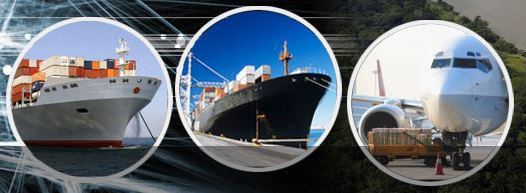
Top 50 World Container Ports

The world’s largest container ports


Top 50 world container portsPorts are hubs that welcome marine vessels so they can dispatch or discharge cargo. In terms of value, seaborne trade carried by container ships is the most important category of waterborne freight, and container handling is one of the key sources of revenue produced by the operation and management of a port. Intermodal containers usually have a capacity of one or two twenty-foot equivalent units, a standard unit of measure which is often being abbreviated to TEU. On a global scale, the busiest ports are located in Asia, the largest ones being Shanghai, Singapore and Hong Kong. The Port of Los Angeles and the adjoining Port of Long Beach together form the largest port in the United States. The cities of Rotterdam, Hamburg and Antwerp are home to the largest ports in Europe.
 

Rank Port
1 Shanghai, China
2 Singapore
3 Shenzhen, China
4 Hong Kong, S.A.R., China
5 Bussan, South Korea
6 Ningbo-Zhou Shan, China
7 Qingdao, China
8 Guangzhou Harbor, China
9 Jebel Ali, Dubai, United Arab Emirates
10 Tianjin, China
11 Rotterdam
12 Dalian, China
13 Port Kelang, Malaysia
14 Kaohsiung, Taiwan
15 Hamburg, Germany
16 Antwerp, Belguim
17 Keihin ports*, Japan
18 Xiamen, China
19 Los Angeles, U.S.A.
20 Tanjung Pelepas, Malaysia
21 Long Beach, U.S.A.
22 Tanjung Priok, Jakarta, Indonesia
23 Laem Chabang, Thailand
24 Ho Chi Minh, Vietnam
25 Bremen/Bremerhaven, Germany
26 Lianyungung, China
27 New York-New Jersey, U.S.A.
28 Hanshin* ports, Japan
29 Yingkou, China
30 Jeddah, Saudi Arabia
31 Algerciras Bay, Spain
32 Valencia, Spain
33 Columbo, Sri Lanka
34 Jawaharlal Nehru, India
35 Sharjah, United Arab Emirates
36 Manila, Philippines
37 Felixstowe, U.K.
38 Santos, Brazil
39 Ambarli, Turkey
40 Colon, Panama
41 Salalah, Oman
42 Balboa, Panama
43 Port Said East, Egypt
44 Gioia Tauro, Italy
45 Georgia Ports, U.S.A.
46 Tanjung Perak, Surabaya, Indonesia
47 Metro Vancouver, Canada
48 Marsaxlokk, Malta
49 Nagoya, Japan
50 Durban, South Africa

What is a freight forwarder

International Freight Forwarders

There are a lot of confusion when it comes to the various companies offering logistics services. from International freight forwarders to  3PL, 4PL and 7PL companies in addition to the many other types of companies.

International Freight Forwarders


Below is a simple definition of a freight forwarder

A Firm specializing in arranging storage and shipping of merchandise on behalf of its shippers. It usually provides a full range of services including: tracking inland transportation, preparation of shipping and export documents, warehousing, booking cargo space, negotiating freight charges, freight consolidation, cargo insurance, and filing of insurance claims. Freight forwarders usually ship under their own bills of lading or air waybills (called house bill of lading or house air waybill) and their agents or associates at the destination (overseas freight forwarders) provide document delivery, deconsolidation, and freight collection services. Also called forwarder.

Many traditional freight forwarding companies are offering other services such as: warehousing, distribution, pick and pack services and transportation management.

This has given rise to what we call 3PL companies.

While the idea of moving cargo from A to B sounds simple, like importing, there are complex regulations that govern the movement of freight worldwide. Every country has its own regulations, and different products have different requirements, and keeping track of them all can be daunting for small business owners.

That’s where working with the right freight forwarding company is essential. a freight forwarder should be able to offer you personalized service and  focus on compliance, you can rest easy knowing that your cargo is in good hands and that you won’t be faced with any surprise charges or delays.

International shipping is by now means easy. Shipping a container involves many activities that most people are not aware of. With more and more regulations affecting imports, international freight companies have to stay on top of all the changes in the market place.

Resources:

7pl Logistics


3PL vs 4PL

What is the difference between 3PL and 4PL?

The CSCMP defines 3PL as follows:

Outsourcing all or much of a company’s logistics operations to a specialized company. The term “3PL” was first used in the early 1970s to identify intermodal marketing companies (IMCs) in transportation contracts. Up to that point, contracts for transportation had featured only two parties, the shipper and the carrier. When IMCs entered the picture—as intermediaries that accepted shipments from the shippers and tendered them to the rail carriers—they became the third party to the contract, the 3PL. Definition has broadened to the point where these days, every company that offers some kind of logistics service for hire calls itself a 3PL. Preferably, these services are integrated, or “bundled,” together by the provider. Services they provide are transportation, warehousing, cross-docking, inventory management, packaging, and freight forwarding. In 2008 legislation passed declaring that the legal definition of a 3PL is “A person who solely receives, holds, or otherwise transports a consumer product in the ordinary course of business but who does not take title to the product.”

The CSCMP defines 4PL as follows:
(more…)