Impact of Tariffs on Logistics

The new trade wars and tariffs imposed by the US and China left many importers in the US looking for answers. Nobody wants to pay higher duties which translates into higher prices to the consumers. Which will result in consumers cutting down on their purchases.

In general, blanket tariffs are counterproductive. Nobody benefits from such practices. It reduces customer confidence.

In the wake of the new tariffs imposed by the US on Chinese products,  importers found themselves forced to increase their prices to offset the increase on the duties being paid or to switch to importing similar products from other countries that are not subject to the new tariffs.

The latest currency devaluation by the Chinese Government has in a way offset the last round of tariffs however; consumer confidence has been affected as customers perceive the trade wars as a sign of instability.

How will the new Tariffs affect Logistics.

1- “Logistics Companies” pay close attention to tariffs as it affects the supply chain. They have to be ready to offer new solutions to their customers. Many International 3PL Companies are seeing an increase in imports from China as Importers build up their Inventories before the Holiday season and before the new tariffs take effect.

2- Freight Forwarders  have noticed and increase in Ocean Freight Shipping from Vietnam and other Countries. It is noted that Chinese companies are shipping their products from Vietnam to avoid paying the additional duties.

3- US Companies who re-export some of their products have opted to shipping directly from China to South America for Example.

4- Companies who Export to South America are using the services of Bonded warehouses to hold their product in bond  instead of paying the extra duties until the product is exported.

5- Importing companies are getting better at negotiating Freight rates in order to compensate for some of the extra duties they might be paying.

The Bottom line about the New Tariffs

In spite of all the hype, we still see more container ships being built, we see shipping volumes increase across the world. The US trade deficit rose by 50 Billion even though the export volume has increased. That means more cargo is entering the US Market which means more cargo is moving to the US ports.

Experiences 3PL Companies are prepared to tackle such issues and advise their customers on the best strategy to adopt.


Resourses:

Freight Forwarders in Miami

International Freight Forwarders

Warehousing Services in Miami

The future of freight forwarding

When do you think about freight forwarding? I hardly believe you think of it when you pick up a toy or a toaster oven from your local store. There is a 90% chance that a freight forwarder was involved somewhere to bring the product to your fingertips.

A freight forward is an important part of the supply chain. Now let’s describe the role of the freight forwarder; It’s basically an organization that uses the services of a shipping company or air cargo company to move cargo from point A to point B. Anywhere in the world a freight forwarder does not own the vessel or aircraft although some shipping companies are freight forwarders.

A freight forward is involved in multi-modal transportation, for example: a shipment of microwaves from the factory in China to London will involve inland transport from a factory to the airport or shipping port and once the cargo arrives in London, it will be transported by truck (Inland Transportation) to the final destination.
Freight forwarders are subject to regulations that vary by country. This makes freight forwarding a tricky business.

Years ago, freight forwarders offered limited services, they only focused on shipping, with time they started offering services such as custom clearance, warehousing, consolidation and other services. Some of these services were outsourced. This has given rise to third-party logistics companies (3PL companies).

Freight forwarders that have not adopted innovation in the past few years are experiencing a slowdown business.
The industry has changed a lot over the past 20 years. A forwarder has become a one stop shop for all our logistics needs. This came with opportunities and challenges.
As a Freight forwarder adds on services, they need to add new talent. People who have experience in packaging, order fulfillment and customer service.

Many freight forwarders try to shed their skin and put on the Logistics Provider skin with little services because basically they focus on freight forwarding, their core competency.

In this challenging market so many freight forwarders are fading because they have not adopted change and innovation. We will continue to witness the change and evolution in this industry.
The next time you pick up your blender or coffee maker, remember how much work was involved.

Types of shipping containers

Know your shipping container

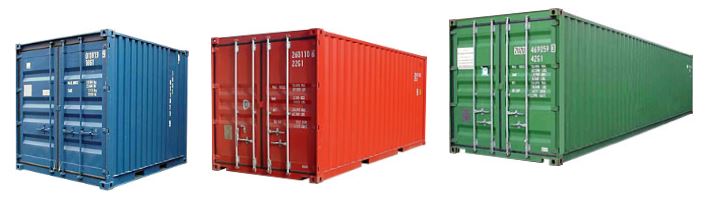
Ocean containers of various types: the standard 20-foot container, standard 40 ft container, 40 ft container of high capacity, Open Top and Flat Rack. External and internal dimensions, container door dimensions, capacity and max cargo weight.

Types of Shipping Containers


Types of shipping containers and dimensions

Size Door Openings*
mm
feet/inches
Internal Dimensions*
mm
feet/inches
Volume*
m3
cubic feet
Feet/inches Width Height Length Width Height Capacity
20 standard
20′ X 8′ X 8’6″
2.340
7′ 8″
2.274
7′ 6″
5.896
19′ 4″
2.350
7′ 8″
2.393
7′ 10″
33
1,170
40 standard
40′ X 8′ X 8’6″
2.340
7′ 8″
2.274
7′ 6″
12.032
39′ 6″
2.350
7′ 8″
2.392
7′ 10″
67
2,390
40 High
40′ X 8′ X 9’6″
2.640
7′ 8″
2.577
8′ 6″
12.032
39′ 6″
2.350
7′ 8″
2.697
8′ 10″
76
2,700
45 High
45′ X 8′ X 9’6″
2.340
7′ 8″
2.584
8′ 5″
13.556
44′ 6″
2.347
7′ 8″
2.696
8′ 10″
86
3,055

Move your fulfillment closer to your customers.

Tell us about your products, order volume, and current pain points. We'll design a micro fulfillment solution that fits your operations and budget.

Request a Micro Fulfillment Quote