
Miami ocean freight forwarders
Miami is the undisputed “Trade and Logistics Hub of the Americas” located at the epicenter of global trade in the strategic center of the Western Hemisphere. Miami Ocean Freight forwarders are here to help. Miami provides superior trade, Ocean Freight Services, Air Freight Services and logistics Solutions, to companies using Miami as a base of operations or as a transshipment point.

Miami ocean freight forwarders are numerous. The competition is so strong which drives the service fees down
Miami International Airport continues to be the #1 international freight airport in the United States and the 9th in the world. Port Miami is the 11th leading container port in the US. Major partners at Port-Miami include 16 shipping lines, FEC railway, on-dock facilities at the seaport. Nearly 90 airlines at MIA contribute to year-round, two-way cargo traffic linking the Americas with Asia, Europe, the Middle East and beyond. Both ports provide easy access to foreign trade zones and superior warehouses designed to meet your requirements.
Florida is projected to become the third most populous state in the U.S. with more than 19 million residents and 94 million visitors, providing new opportunities for global companies. More than 1,400 multinational corporations have offices in Miami to take advantage of the multi-lingual workforce who speak over 130 languages with extensive experience in the 47 countries of the Americas as well as Asia and Europe.
Miami’s international business community stands ready to assist you to increase your trade opportunities, meet new trade partners and connections, lower your costs and facilitate your entry into one of the world’s leading growth markets.
Port Miami has the most direct service to Latin America and the Caribbean making it the premier hub to the Americas. 16 top shipping lines sail to more than 85 ports – with regular service to Asia, Europe, Latin America and beyond.
Port Miami is the first port of call on the East Coast for cargo transiting the Panama Canal, making it the closest gateway to the US market, reducing time-to-market as well as transportation and shipping costs. At -50 feet, Port Miami’s depth will make it the only US port on the Eastern Seaboard south of Virginia that can accommodate super Post Panama vessels.
For a list of the best Miami ocean freight forwarders, you should search the yellow pages.
Miami has become a hub for Procurement Service Providers .
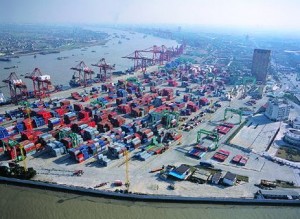 Ports are hubs that welcome marine vessels so they can dispatch or discharge cargo. In terms of value, seaborne trade carried by container ships is the most important category of waterborne freight, and container handling is one of the key sources of revenue produced by the operation and management of a port. Intermodal containers usually have a capacity of one or two twenty-foot equivalent units, a standard unit of measure which is often being abbreviated to TEU. On a global scale, the busiest ports are located in Asia, the largest ones being Shanghai, Singapore and Hong Kong. The Port of Los Angeles and the adjoining Port of Long Beach together form the largest port in the United States. The cities of Rotterdam, Hamburg and Antwerp are home to the largest ports in Europe.
 In the world of global transport, understanding the differences between supply chain management,
You must be logged in to post a comment.