Air Freight vs Ocean Freight

Air Freight vs Ocean Freight for Exporters: Which Should You Choose?

Choosing the right mode is one of the biggest decisions in international exporting. The best option depends on your product type, delivery timeline, shipment size, budget, and risk tolerance. In this guide, we break down air freight vs ocean freight for exporters—especially ecommerce brands and distributors—so you can ship globally with fewer delays and lower landed cost.

If you want expert help selecting the fastest, safest, and most cost-effective export option, start with our Export Freight Services.


Quick Comparison: Air Freight vs Ocean Freight

  • Speed: Air is fastest; ocean is slower but efficient for large volumes.
  • Cost: Ocean is typically lower cost per unit; air costs more but can reduce stockouts.
  • Best for: Air = urgent/high value; Ocean = heavy/bulky/high volume.
  • Risk exposure: Ocean can face port congestion and longer dwell times; air can face capacity shifts.

When Air Freight Makes Sense for Exporters

Air freight is ideal when time matters more than cost. Exporters commonly use air for:

  • Urgent replenishment to prevent stockouts
  • High-value or lightweight products where speed protects margins
  • New market launches when demand is uncertain
  • Seasonal peaks where late inventory equals lost revenue

Air Freight for Ecommerce Exporters

Ecommerce brands often choose air to keep overseas fulfillment inventory in stock. Even if air costs more, the real question is whether ocean delays would cause missed sales, lower seller ratings, or paid-ad waste.


When Ocean Freight Makes Sense for Exporters

Ocean freight is the go-to option when you need cost efficiency for larger shipments. Exporters commonly choose ocean for:

  • Bulk replenishment for distributors or overseas warehouses
  • Heavy or bulky products where air cost is prohibitive
  • Stable demand where longer planning windows are acceptable
  • FCL and LCL shipments to match volume and budget

FCL vs LCL (Exporters’ Shortcut)

  • FCL (Full Container Load): Best when you can fill a container or want dedicated space.
  • LCL (Less-than-Container Load): Best when you have smaller volume and want to share container space.

The Hidden Factor: Total Landed Cost

Exporters often compare only the freight rate, but the smarter metric is total landed cost, which includes:

  • Freight charges
  • Handling and port/terminal fees
  • Documentation and compliance costs
  • Insurance options
  • Inventory carrying cost (cash tied up during transit)
  • Stockout risk and revenue loss

In many cases, air freight can be “more expensive” on paper but cheaper in real business impact if it prevents stockouts.


How International 3PL Helps You Choose the Right Export Mode

As a freight-forwarding operator, International 3PL helps exporters choose the right mode based on timeline, cargo, budget, and risk. We coordinate routing, carrier selection, export documentation, and shipment visibility through a single process.

Learn more about our end-to-end approach on our Freight Forwarding Services page, or go directly to Export Freight Services to get live assistance.


Frequently Asked Questions

Is air freight always faster than ocean freight?

Generally yes, but actual delivery time depends on pickup readiness, airport/port operations, carrier schedules, and destination handling. Air is usually best when days matter.

Is ocean freight always cheaper than air freight?

Ocean is typically cheaper per unit for large shipments, but the total business cost can favor air if ocean timing creates stockouts, missed launches, or lost sales.

What’s better for ecommerce exports?

Many ecommerce exporters use a hybrid approach: air for urgent replenishment and ocean for bulk restock—based on demand planning and margin.

Should I choose FCL or LCL for ocean exports?

Choose FCL when volume is high or you want dedicated space. Choose LCL when volume is smaller and you want to share container space.

What info do you need to recommend air vs ocean?

Origin, destination, cargo details (weight/dimensions), shipment value, timeline, carton/pallet counts, and special handling requirements.

AI Revolutionizes Fulfillment Services

In an era where efficiency and customer satisfaction reign supreme, the fusion of artificial intelligence (AI) with fulfillment services is transforming the logistics and supply chain industry. From predictive analytics to automated warehousing, AI is not just a futuristic concept but a present-day game-changer. This article delves into how AI is revolutionizing fulfillment services, driving efficiencies, reducing costs, and enhancing the overall customer experience.

The AI – Driven Transformation of Fulfillment Services

1. Predictive Analytics and Demand Forecasting

AI-powered predictive analytics are at the forefront of the transformation, enabling businesses to forecast demand with unprecedented accuracy. By analyzing historical data, market trends, and consumer behavior, AI algorithms predict product demand, helping companies to optimize inventory levels and reduce the risk of overstocking or stockouts. This not only saves costs but also ensures that customers find what they need when they need it.

2. Automated Warehousing

The introduction of Artificial Intelligence in warehousing has led to the rise of smart warehouses. Automated systems, such as robotic pickers and conveyors, work alongside human workers to increase efficiency and accuracy. AI algorithms control these robots, ensuring that they pick, pack, and move items in the most efficient manner possible. This reduces human error, speeds up the fulfillment process, and enables 24/7 operations.

3. AI Enhances Inventory Management

Artificial Intelligence enhances inventory management by providing real-time insights into stock levels, location, and movement. Advanced AI systems can track inventory across multiple locations, predict reorder points, and even suggest optimal order quantities. This level of precision in inventory management minimizes waste, reduces holding costs, and ensures that products are always available for customers.

4. Dynamic Routing and Delivery Optimization with AI

Delivery is a critical component of the fulfillment process, and Artificial Intelligence is making it smarter and faster. AI-powered dynamic routing systems analyze traffic patterns, weather conditions, and delivery windows to optimize delivery routes in real-time. This ensures timely deliveries, reduces fuel consumption, and lowers operational costs. Additionally, Artificial Intelligence can predict potential delays and reroute deliveries accordingly, keeping customers informed and satisfied.

5. Personalized Customer Experiences

Artificial Intelligence is not just about efficiency; it’s also about enhancing the customer experience. Through data analysis, Artificial Intelligence can provide personalized recommendations, predict customer preferences, and offer tailored promotions. This level of personalization increases customer loyalty and satisfaction, as shoppers receive a more engaging and customized shopping experience.

Case Studies: Artificial Intelligence in Action

Amazon’s Smart Warehouses

Amazon, a pioneer in fulfillment innovation, employs AI extensively in its warehouses. Robots powered by Artificial Intelligence navigate through the warehouse, picking and transporting items to human workers for packing. This system, known as Amazon Robotics, has significantly increased the speed and efficiency of Amazon’s fulfillment operations.

Walmart’s Predictive Inventory Management

Walmart uses Artificial Intelligence to enhance its inventory management. By analyzing data from various sources, including social media, weather forecasts, and sales data, Walmart’s AI system predicts product demand and optimizes stock levels across its stores. This has led to a reduction in excess inventory and improved product availability.

The Future of AI in Fulfillment Services

The integration of Artificial Intelligence in fulfillment services is just beginning. Future advancements could include fully autonomous warehouses, drone deliveries, and even more sophisticated predictive models. As AI technology continues to evolve, its applications in fulfillment services will expand, driving further efficiencies and transforming the logistics landscape.

Conclusion

Artificial intelligence is revolutionizing fulfillment services by making them faster, more efficient, and more customer-centric. From predictive analytics to automated warehousing, AI is at the heart of a new era in logistics and supply chain management. As companies continue to adopt and innovate with AI, the future of fulfillment services looks brighter than ever, promising a seamless and efficient experience for businesses and customers alike.

Resources
Cross Dock Miami
Miami Freight Forwarders


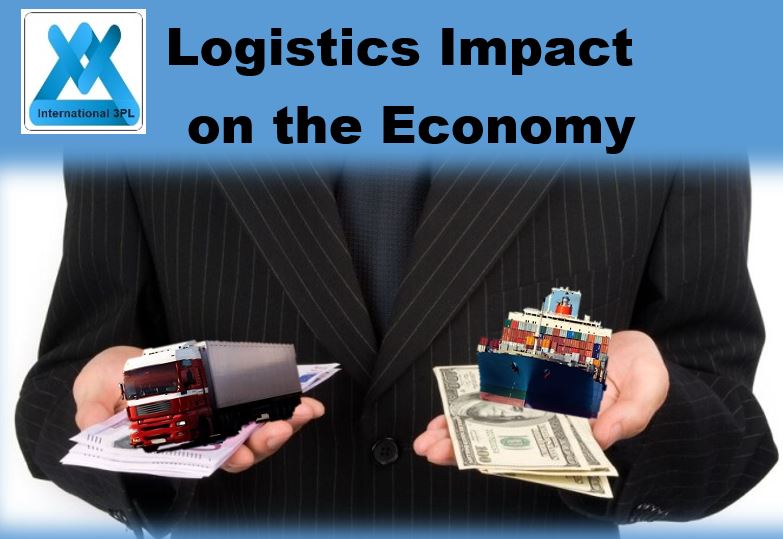
Logistics Impact on the Economy

Logistics Impact on the economy has been so strong it ignited the economic growth and expansion from 2009- until now, which is the longest in history. Have you ever wondered we are expanding at a rate and why we are having such a run? Was it the Federal Reserve bank, The President’s economic policies, the demographic shift or the US Currency?  Well it is none of those reasons. The correct answer is logistics.

Many years ago, companies lived and died by the Inventory Cycle. Companies used to bulk up on inventory in anticipation of demand and sales afraid of long delivery times from vendors. It used to take weeks or months before customers took possession of their goods. Companies would carry a lot more inventory that they needed, that tied up financial resources and made them vulnerable to demand changes. We all have witnessed large companies getting rid of obsolete items at a total loss.

Nowadays, companies have a lot more flexibility when it comes to inventory control, they do not have to pile up inventory in their warehouses.  Shipping companies have made it easier to get the product on time (Just in Time or JIT).  Companies can use the services of the Freight Forwarders to make sure the products are shipped on time and received at destination rapidly.

Logistics Impact on the shipping Industry

As more and more products are being imported, Freight Forwarding Companies became an integral part of the Supply Chain Providing services such as Quality Control, Compliance and import services. Companies passed some of the responsibility of getting the inventory on time to Freight Forwarders. These companies order less amount of inventory, but they are receiving it more frequently.

The direct Impact of Logistics on the various sectors of logistics:

  1. To control Inventory levels, a new class of consultants came to the scene, Supply chain Consultants. The help companies control their inventory levels and ensure on time delivery.
  2. Warehousing Companies grew in number as companies sought to hold inventory in different locations in order to service a larger area.
  3. Third party Logistics Companies or 3PL Companies emerged into the market as providers of all the logistics solutions needed to deliver products from Manufacturer to End User such as Order Fulfillment, Inland Transportation, Ocean Freight shipping and Storage. Companies no longer need to have their own warehouses to store their products and fulfill their orders. Knowing that you can depend on a 3PL Company to fulfill orders allow companies to focus more on their core competencies which fueled product innovation.
  4. International Freight forwarders started opening more locations around the globe to facilitate the transfer of goods from Vendor to Customer.

The re-engineering of Logistics

The reengineering of the Logistics Industry has contributed to creating more jobs and new companies offering logistics services. It also allowed for new products to enter the market creating new demand for products.

Products no longer take days or weeks to be delivered, thanks to logistics they can be delivered the next day or even the same day.

In conclusion, logistics made it easier, cheaper and faster to deliver orders from Factory to end user. There is no more need for companies to carry large amounts of inventory and invest large amounts of money in inventory since, thanks to logistics companies, product delivery has been made easier than ever.


Resources:

Omni Channel Fulfillment

Contract Logistics Companies

International Freight Forwarders

Impact of Artificial intelligence on Logistics

Artificial Intelligence has made it into our lives a while back and continues to make an impact. From playing chess against a computer to Siri, Alexa and detecting cancer cells, A.I. is here to stay.

The logistics industry is beginning to invest in A.I. heavily starting with the shipping companies such as Maersk and CMA. Soon we will be able to see more efficient shipments at a lesser cost.

To those of you who watch futuristic movies, rest assured the Artificial Intelligence will not take over the world, we will not be ruled by robots.

Artificial Intelligence is about machine learning and learning (input) requires processing power. There just isn’t enough processing power in the world to match the power of the human brain. To clarify further it took 90,000 processers 1 hour to process what 1/100 of the brain to process in 1 second. You do that math.

When it comes to logistics, Artificial Intelligence is lagging behind other fields. Ocean Shipping Companies, are developing software to better track Ocean Freight shipments minute by minute.

In the next 5-10 years, we might be able to see driverless trucks making deliveries, robots in the warehouse will be able to determine which box to use for a specific item. The shipping software will automatically decide on the best shipping method at the least cost depending on the variables presented.

Tech giants, like Amazon, have been using Artificial Intelligence to determine which location an item should be shipped from to minimize the cost and expedite the shipment, Omnichannel Fulfillment.

Efficiency of the supply chain will continue to improve with the implementation of A.I.

Will Artificial Intelligence Replace us?

You need to understand that as long as A.I. lacks consciousness, human interventions will always be needed.  Our input will guide A.I.  so, for you dreamers out there, please come back to reality and for those of you afraid of technology, do not worry, robots will not make us obsolete simply because there is no power more dominating than the human brain. Just ask Microsoft about the failed Tay experiment. A.I. has to be able to perceive and act.

Resources

A.I. and 3PL

A.I. and freight Forwarding

Preparing for a circular Economy

Regulations will continue to evolve in support of the circular economy. Circular economy, in short, is about setting targets on waste and recycling. This directly affects certain Logistics Services  such as reverse logistics,  packaging and fulfillment.

The EU’s Circular economy package went into force in 2018. U.S. and other countries are likely to follow. Expect to see significant carbon emissions regulations in the next few years.

International 3Pl has always provided reverse logistics services to its clients reducing the carbon foot print associated with excessive handling and transportation of returned products.

Our Order fulfillment services focus on forward distribution as well as reverse logistics which is key to a circular economy.

Recycling of boxes is at the core of our packaging services . We reuse most of the boxes that we receive for shipping out parcels without compromising the look or integrity of the shipment.

We are currently experimenting with single use boxes especially with our last mile services. We deliver then make sure to get the box back to be used in future shipments.

We are planning on applying the same practices at all of our locations.

resources:

Contract Logistics

3PL Companies in Miami

Logistics Companies in South America

Omnichannel Order fulfillment

Omnichannel order fulfillment Or (Omni Channel) is the order fulfillment across multiple channels. To put it simply, it is about order completion.  It does not matter where the order is being shipped from as long as it is completed at the lowest cost to the retailer.

Omnichannel Fulfillment is about having inventory available across all channels from one location. In one case it is the retailer’s website.

Omnichannel Order fulfillment Simplified

You are a retailer who received an online order from a customer for one of your products. If the product is available in your Distribution Center or 3PL Warehouse, it ships from there, if not, it could ship from one of your retails outlets or a partner.

It is about completing the order and creating a great customer experience. Which  Order Fulfillment strategy should be used when an order is received? The answer is: The most cost effective fulfillment process.

Types of Fulfillment Channels

1- Straight order in warehouse fulfillment

This means that the order will be shipped from the warehouse, DC or 3PL Company as it is received. If the product is not available at that location, order is not shipped even though it might be available at a retail outlet or a drop ship from the vendor.

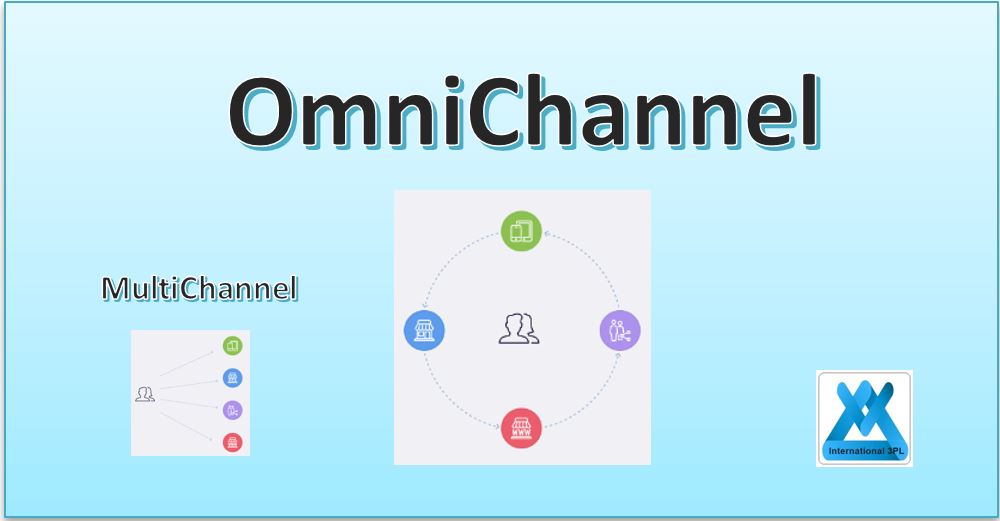
2- Multi Channel Fulfillment

Inventory is available at different locations from warehouses to retail outlets and vendors however it lacks integration. Multichannel is identified by a non-integrated way to approach customers and inventory.

3-Omnichannel Fulfillment.

Similar to multichannel with a major difference, It requires coherent and absolute inventory integration.

Challenges to Ominchannel fulfillment

A resistant culture. The retailer has to learn new methods of fulfillment which is not always easy and some top managers might resist.

Where to start?

Adopting Omni Channel fulfillment is not easy. You first have to choose an Ominchannel fulfillment strategy that is easiest for people to embrace.

Omni Channel fulfillment is about cutting costs and faster completion of orders. Adopting Omnichannel fulfillment means that that should one fulfillment route fail, the operations can pivot to an alternative.

When your order is placed with a retailer, the order is filled immediately from either the DC, 3PL company, the vendor or a partner without you even having to worry where the order is coming from. That is what Omnichannel fulfillment is all about.

International 3Pl has been a major partner with many retailers adopting Omnichannel fulfillment. We are an integral part of the strategies adopted by many retailers.

Resources:

Contract Logistics Companies

Order Fulfillment Companies

3Pl Warehouses

Procurement services

Procurement is the processing of acquiring new products or services. It is a fancy name for obtaining or getting. The phrase has been used mostly by the Military. It took a new meaning once it became part of the supply chain and logistics arena.

Products could be procured or acquired locally or internationally. For a business to continue to thrive it has to constantly look for new products. The demand for new products by consumers continues to put pressure on companies to reach out to various manufacturers all over the world for new products.

International 3PL Procurement Services

As a Third Party Logistics Company, International 3PL, through its contract logistics division has decided to offer procurement services at no charge for its existing Order Fulfillment clients.

Let us assume that you are a company based in Colorado who handles distribution of cellular phone accessories and you are looking for new cutting edge technology, most likely you would search the Internet for new vendors from all over the world.

Most likely, you will strike gold and find what your looking for. In this case we can assist you in the  Freight Forwarding part of the shipment, customs clearance and delivery to your own warehouse or our warehouse.

In other cases, you are not that lucky and you can not find the right product. This is where we come in. We will source the product for you, make sure is what you are looking for and help you negotiate the agreement with your vendor.

The Logistics of Procurement

  • We will find the product you need.
  • Verify it matches the specifications you have spelled out
  • Make sure the source is legitimate and in compliance with al local and international regulations.
  • Make sure that the product is labeled according to requirement.
  • If needed we can oversee the financial transaction.
  • Arrange for Ocean or Air shipping, customs clearance and compliance.
  • If asked, we can get involved with dispute resolution.

Our Contract logistics division located at 3500 NW 114th Avenue has been offering procurement services successfully to many of the local businesses.

resources:

Contract Logistics

4PL Companies

Freight Forwarders in Miami

What is a Fulfillment Center

A fulfillment center is a company that handles the receiving, storage and shipping of your product to the end user. The end user could be a retail customer of a business entity . A fulfillment Center the ideal solution for small and medium-sized eCommerce businesses that want to scale, add more products, increase sales and at the same time, keep costs low.

Who needs a Fulfillment Center ?

companies who meet below criteria need to solicit the services of an order fulfillment company

Companies with limited space . If the company lacks the budget to lease or warehouse, a fulfillment company is the way to go.

Does shipping and packaging make you struggle? ? Do you often find yourself dropping the ball on sending the orders out leading to unhappy customers?

Organizations that are limited in resources and need to free up time in order to focus in their core competencies need a 3PL company that can handle the order fulfillment.

Need to reduce costs. What happens when you decide to add more products to your range? You need to hire additional hands to help you with packaging, inventory management or shipping. a third party logistics company might be the answer.

How to choose a Fulfillment center?

  • Location
  • Review and Testimonials
  • Years in Business
  • Service rates and don’t look for the cheapest. You get what you pay for.

Here are some questions you can ask as you are interviewing prospective fulfillment centers:

  • can you provide references from current or past clients that I can call?
  • how soon do you ship an order after it comes in?
  • what type of packaging is included?
  • do you have a minimum monthly fee?
  • can you handle large orders?
  • do you partner with any shipping carriers to get discounts on shipping?
  • what are your monthly storage fees and other fees?
  • how do you handle the receiving process?
  • Can you handle returns?
  • how are the packages branded when they go out?
  • can you handle international shipping?

Keep in mind that a fulfillment center is different that a warehouse.

A fulfillment center is the physical location from which a third-party logistics (3PL) provider (also known as a fulfillment provider) fulfills customer orders for ecommerce retailers. A fulfillment center exists to get online orders to customers in a timely fashion and relieve ecommerce companies of managing this crucial-yet-challenging process.

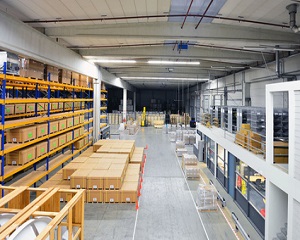
When we talk about a warehousing solution, we’re referring to a company that stores products for an extended period of time. A warehouse is a large storage center or industrial space designed to house inventory in bulk. You will see equipment like forklifts and containers, with shelves stacked high and stocked with large quantities of products.

Drop ship

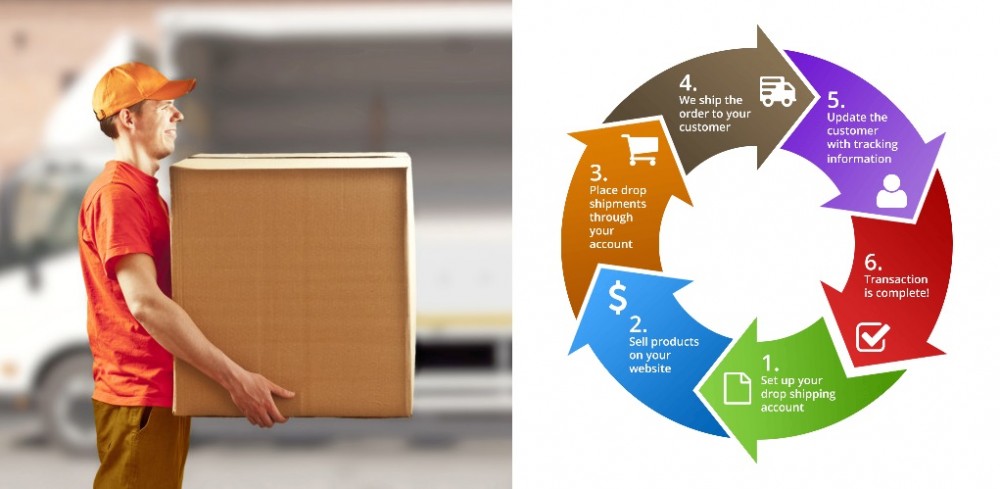
When you hear the term Drop Ship , it refers to movement of goods from the manufacturer directly to the retailer or end user without going through the usual distribution channels.

it is a fulfillment method where a store doesn’t keep the products it sells in stock. Instead, when a store sells a product, it purchases the item from a third party and has it shipped directly to the customer. As a result, the merchant never sees or handles the product.

The biggest difference between dropshipping and the standard retail model is that the selling merchant doesn’t stock or own inventory. Instead, the merchant purchases inventory as needed from a third party – usually a wholesaler or manufacturer – to fulfill orders. 

Pros and cons of using drop ship for order fulfillment

Pros

Good earning potential.

Location independent . For small, one-person businesses, most of the time you just need a laptop and an internet connection.

Less capital needed for the initial investment. With drop shipping, you don’t manufacture anything yourself, so you don’t need to invest in inventory, materials, tools, or anything else related to getting a product created.

It’s easier to scale your business. Quite simply, as a drop shipping business, ramping up your sales volume is not that much connected to higher product/operating expenses. 

Less overhead. 

  • no storage needed, as you don’t keep any products with you,
  • no need to pack anything yourself,
  • no need to track your inventory,
  • no need to hire more staff to deal with more products or sales coming in.

Cons

Someone else builds and sends the product. This is just a huge part of the overall customer experience. If anything goes bad with your supplier, the customer will still blame only you. In general, you lose quality control since you can’t see or use the product before it goes to the customer.

It’s more probable to come across copycats – people attempting to do exactly what you are doing.

Returns can be tough. Based on the agreement you have with your suppliers, customers might be required to return the products to you, and then you have to take care of the return/complaint process yourself. During that time, keeping the client happy can be difficult.

International 3PL works with you to make sure that your product reaches the end user quickly and efficiently.

Our facilities are equipped to handle all your needs form small to large projects. We are one of the favorite drop shippers for National stores.

Move your fulfillment closer to your customers.

Tell us about your products, order volume, and current pain points. We'll design a micro fulfillment solution that fits your operations and budget.

Request a Micro Fulfillment Quote