
International Freight Forwarding
As an international shipper, you want efficient and dependable full service freight forwarder that matches your business demands. To keep your operations flowing, you need a company that will handle your shipments quickly and smoothly. That is our job as a partner. With multiple sailing and gateway options, supported by relationships with a variety of carriers, you have maximum visibility and options.
An International Freight Forwarding & Shipping Company usually offers a full range of global logistics services so that the movement of your international freight is very smooth.
Before entering into negotiations with a logistics provider, analyze your own transportation procedures and determine your requirements. Consider factors such as the volume of shipments the new agent will be handling.
Will your shipments move primarily via ocean, air, or truck? Do your international shipments consist primarily of container loads or do they sail as breakbulk or heavyweight freight? If your product moves via air, will most of the cargo fit into the bellies of passenger aircraft or must it travel via more expensive main-deck configuration?
As your international freight forwarder, you can rely on our Network to have the knowledge and means to support your business at all times. International 3PL Network of providers can help you navigate the complexities of international trade by combining global reach, visibility and reliability. Our customer service and account management teams are determined to meet your international transportation needs.
As your single source for International Freight Forwarding, International 3PL offers a complete global network and can design solutions to streamline your supply chain and increase efficiency, accuracy and cost savings.
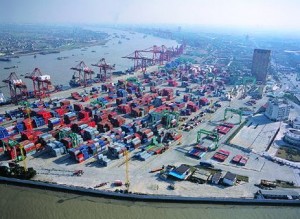 Ports are hubs that welcome marine vessels so they can dispatch or discharge cargo. In terms of value, seaborne trade carried by container ships is the most important category of waterborne freight, and container handling is one of the key sources of revenue produced by the operation and management of a port. Intermodal containers usually have a capacity of one or two twenty-foot equivalent units, a standard unit of measure which is often being abbreviated to TEU. On a global scale, the busiest ports are located in Asia, the largest ones being Shanghai, Singapore and Hong Kong. The Port of Los Angeles and the adjoining Port of Long Beach together form the largest port in the United States. The cities of Rotterdam, Hamburg and Antwerp are home to the largest ports in Europe.
 In the world of global transport, understanding the differences between supply chain management,
You must be logged in to post a comment.