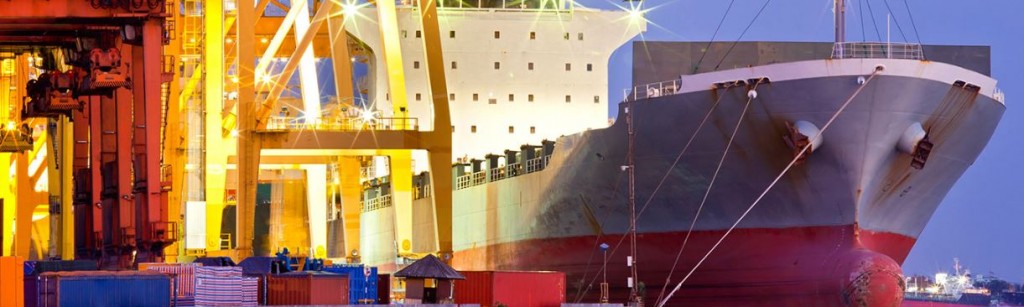
Air Freight vs Ocean Freight

Air Freight vs Ocean Freight for Exporters: Which Should You Choose?

Choosing the right mode is one of the biggest decisions in international exporting. The best option depends on your product type, delivery timeline, shipment size, budget, and risk tolerance. In this guide, we break down air freight vs ocean freight for exporters—especially ecommerce brands and distributors—so you can ship globally with fewer delays and lower landed cost.

If you want expert help selecting the fastest, safest, and most cost-effective export option, start with our Export Freight Services.


Quick Comparison: Air Freight vs Ocean Freight

  • Speed: Air is fastest; ocean is slower but efficient for large volumes.
  • Cost: Ocean is typically lower cost per unit; air costs more but can reduce stockouts.
  • Best for: Air = urgent/high value; Ocean = heavy/bulky/high volume.
  • Risk exposure: Ocean can face port congestion and longer dwell times; air can face capacity shifts.

When Air Freight Makes Sense for Exporters

Air freight is ideal when time matters more than cost. Exporters commonly use air for:

  • Urgent replenishment to prevent stockouts
  • High-value or lightweight products where speed protects margins
  • New market launches when demand is uncertain
  • Seasonal peaks where late inventory equals lost revenue

Air Freight for Ecommerce Exporters

Ecommerce brands often choose air to keep overseas fulfillment inventory in stock. Even if air costs more, the real question is whether ocean delays would cause missed sales, lower seller ratings, or paid-ad waste.


When Ocean Freight Makes Sense for Exporters

Ocean freight is the go-to option when you need cost efficiency for larger shipments. Exporters commonly choose ocean for:

  • Bulk replenishment for distributors or overseas warehouses
  • Heavy or bulky products where air cost is prohibitive
  • Stable demand where longer planning windows are acceptable
  • FCL and LCL shipments to match volume and budget

FCL vs LCL (Exporters’ Shortcut)

  • FCL (Full Container Load): Best when you can fill a container or want dedicated space.
  • LCL (Less-than-Container Load): Best when you have smaller volume and want to share container space.

The Hidden Factor: Total Landed Cost

Exporters often compare only the freight rate, but the smarter metric is total landed cost, which includes:

  • Freight charges
  • Handling and port/terminal fees
  • Documentation and compliance costs
  • Insurance options
  • Inventory carrying cost (cash tied up during transit)
  • Stockout risk and revenue loss

In many cases, air freight can be “more expensive” on paper but cheaper in real business impact if it prevents stockouts.


How International 3PL Helps You Choose the Right Export Mode

As a freight-forwarding operator, International 3PL helps exporters choose the right mode based on timeline, cargo, budget, and risk. We coordinate routing, carrier selection, export documentation, and shipment visibility through a single process.

Learn more about our end-to-end approach on our Freight Forwarding Services page, or go directly to Export Freight Services to get live assistance.


Frequently Asked Questions

Is air freight always faster than ocean freight?

Generally yes, but actual delivery time depends on pickup readiness, airport/port operations, carrier schedules, and destination handling. Air is usually best when days matter.

Is ocean freight always cheaper than air freight?

Ocean is typically cheaper per unit for large shipments, but the total business cost can favor air if ocean timing creates stockouts, missed launches, or lost sales.

What’s better for ecommerce exports?

Many ecommerce exporters use a hybrid approach: air for urgent replenishment and ocean for bulk restock—based on demand planning and margin.

Should I choose FCL or LCL for ocean exports?

Choose FCL when volume is high or you want dedicated space. Choose LCL when volume is smaller and you want to share container space.

What info do you need to recommend air vs ocean?

Origin, destination, cargo details (weight/dimensions), shipment value, timeline, carton/pallet counts, and special handling requirements.
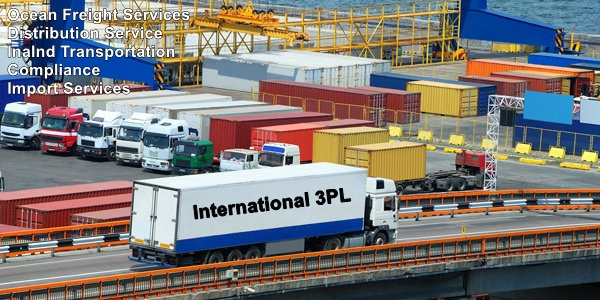
Logistics and BlockChain

Blockchain technology has been revolutionizing various industries, and the logistics sector is no exception. The distributed ledger technology (DLT), which serves as the foundation for blockchain, is transforming the logistics industry by enhancing transparency, efficiency, and security in supply chain management.

By integrating blockchain, the multifaceted roles of intermediaries and manual paperwork become obsolete in the freight forwarding continuum. Smart contracts, which are self-executing agreements governed by predefined conditions, streamline tasks like customs clearance, payments, and adherence to compliance standards.

Blockchain technology is being used in the shipping industry to enhance transparency, efficiency, and security in supply chain management. Here are some examples of how blockchain is transforming the shipping industry:

Shipment Tracking: Blockchain technology can be used to track shipments more effectively. It provides a secure, transparent, and verifiable way to track the movement of goods across the entire supply chain. This can help reduce administrative tasks by automating the documentation process and protect transactions across the entire logistics chain 2.

Smart Bills of Lading: Blockchain technology can be used to create smart bills of lading, which are digital documents that contain all the information about a shipment. These documents can be shared securely and transparently between all parties involved in the shipment, including the buyer, seller, and carrier. Smart bills of lading can help reduce the risk of fraud and errors, and improve the speed and efficiency of the shipping process .

Blockchain technology provides a decentralized, secure, and transparent platform for supply chain operations. With blockchain, logistics companies can create an immutable ledger that records every transaction and movement of goods, from the manufacturer to the consumer 4. The technology can help track international shipments more effectively, reduce administrative tasks by automating the documentation process, and protect transactions across the entire logistics chain.

Untangling the Supply Chain Knot

Imagine a world where your morning coffee beans whisper their origin story, where every package dances a transparent jig across continents, and delays are as elusive as unicorns. This, my friends, is the future logistics promises, painted with the vibrant strokes of blockchain technology.

For centuries, the logistics labyrinth has plagued humankind. Paperwork mountains obscuring visibility, trust issues breeding inefficiencies, and fraud lurking in every shadowy corner. Blockchain, the ingenious digital ledger, aims to be the Ariadne’s thread, guiding us out of this maze and into a sunlit era of streamlined deliveries.

Its magic lies in its distributed nature. Every step, from sourcing to doorstep, is etched onto an incorruptible chain of blocks, visible to all authorized eyes. This shared truth eliminates paperwork purgatory, fosters trust like never before, and lets you track your package with the precision of a hawk eyeing its prey.

But blockchain’s superpowers extend far beyond mere tracking. Imagine perishable goods equipped with sensors whispering their temperature tales onto the blockchain, ensuring optimal conditions and reducing food waste. Picture customs formalities streamlined into a digital waltz, slashing clearance times and boosting trade efficiency. Envision counterfeit goods exposed under the blockchain’s unforgiving spotlight, protecting both consumers and legitimate businesses.

The benefits ripple outwards, like waves from a pebble tossed in a pond. Costs plummet as manual processes automate, errors vanish under the blockchain’s watchful gaze, and collaboration thrives in this new ecosystem of shared trust. Sustainability gets a boost, as ethical sourcing and responsible practices become transparent and traceable. And in the end, the consumer emerges victorious, greeted by faster deliveries, lower prices, and a newfound confidence in the products they hold dear.

Of course, the road to blockchain utopia isn’t paved with digital daisies. Scalability hurdles loom, regulatory landscapes remain murky, and collaboration across diverse industry players is no mean feat. Yet, the potential is undeniable. The logistics industry, long yearning for a revolution, has found its champion in blockchain.

So, the next time you sip your morning coffee, remember the invisible dance it performed across the globe, guided by the invisible hand of blockchain. This is just the beginning, a glimpse into a future where logistics flows like a well-oiled symphony, and the only knots we encounter are the ones adorning our finest neckties. The supply chain’s tangled web is unraveling, thread by transparent thread, and the world is watching, breathless with anticipation.

Conclusion

Blockchain technology is transforming the logistics industry by enhancing transparency, efficiency, and security in supply chain management . The technology is being used on a global scale across industries of all kinds, allowing for trusted and secure transactions among all supply chain partners. With the technology gaining traction every day, it looks as though it will continue to transform the future of logistics .


Export Services

International 3PL specializes in export services to many countries around the globe. Our Export services cover all types of Cargo including personal effects shipping. We ensure the smooth transit of your products to their final destination around the world.

Exporting is vital for growing your business. Knowing how to deliver your product to a new market is a critical for your success.

International 3PL’s Export services are designed to simplify the process and have the orders shipping as quickly as possible.

What you need to know about Exporting

Freight Forwarders

An international freight forwarder is an agent for the exporter in moving cargo to an overseas destination. These agents are familiar with the import rules and regulations of foreign countries, the export regulations of the U.S. government, the methods of shipping, and the documents related to foreign trade.

Freight forwarders assist exporters in preparing price quotations by advising on freight costs, port charges, consular fees, costs of special documentation, insurance costs, and their handling fees, that is why it is important to work with a reputable freight forwarder.

Packing

Exporters should be aware of the demands that international shipping puts on packaged goods. Exporters should jeep four potential problems in mind when designing an export shipping crate: breakage, moisture, pilferage and excess weight.

Buyers are often familiar with the port systems overseas, so they will often specify packaging requirements. If the buyer does not specify this, be sure the goods are prepared using these guidelines

Labeling

Specific marking and labeling is used on export shipping cartons and containers to:

  • Meet shipping regulations;
  • Ensure proper handling;
  • Conceal the identity of the contents;
  • Help receivers identify shipments; and
  • Insure compliance with environmental and safety standards.

The overseas buyer usually specifies which export marks should appear on the cargo for easy identification by receivers Therefore communication with the importer is essential

Documentation

While Exporters can prepare the documents themselves, its advisable that exporters should seriously consider having the freight forwarder handle the formidable amount of documentation that exporting requires as forwarders are specialists in this process. The following documents are commonly used in exporting; but which of them are necessary in a particular transaction depends on the requirements of the U.S. government and the government of the importing country.

  • Air freight shipments are handled by air waybills, which can never be made in negotiable form
  • A bill of lading is a contract between the owner of the goods and the carrier (as with domestic shipments).
  • A commercial invoice is a bill for the goods from the seller to the buyer. These invoices are often used by governments to determine the true value of goods when assessing customs duties.
  • A certificate of origin is a document that is required in certain nations. It is a signed statement as to the origin of the export item.
  • A NAFTA certificate of origin is required for products traded among the NAFTA countries (Canada, the United States, and Mexico).
  • Inspection certification is required by some purchasers and countries in order to attest to the specifications of the goods shipped. This is usually performed by a third party and often obtained from independent testing organizations.
  • A dock receipt and a warehouse receipt are used to transfer accountability when the export item is moved by the domestic carrier to the port of embarkation and left with the ship line for export.
  • A destination control statement appears on the commercial invoice, and ocean or air waybill of lading to notify the carrier and all foreign parties that the item can be exported only to certain destinations.

Documents Required by US Government

  • A Shipper’s Export Declaration(SED) is used to control exports and act as a source document for official U.S. export statistics.
  • An export license is a government document that authorizes the export of specific goods in specific quantities to a particular destination. This document may be required for most or all exports to some countries or for other countries only under special circumstances.
  • An export packing list considerably more detailed and informative than a standard domestic packing list. 

Shipping

The handling of transportation is similar for domestic and export orders. Export marks are added to the standard information on a domestic bill of lading. These marks show the name of the exporting carrier and the latest allowed arrival date at the port of export consequently, instructions for the inland carrier to notify the international freight forwarder by telephone upon arrival should also be included.

Insurance

Export shipments are usually insured against loss, damage, and delay in transit by cargo insurance. Carrier liability is frequently limited by international agreements. Additionally, the coverage is substantially different from domestic coverage. Arrangements for insurance may be made by either the buyer or the seller, in accordance with the terms of sale. Exporters are advised to consult with international insurance carriers or freight forwarders for more information.

Although sellers and buyers can agree to different components, coverage is usually placed at 110 percent of the CIF (cost, insurance, freight) or CIP (carriage and insurance paid to) value

Tariffs

Finally, it is very important to consider the effects of tariffs, port handling fees, and taxes when determining your product’s final cost as they can be high. Typically, the importer pays these charges. However, these costs will influence how much the buyer is willing to pay for your product.

When you are ready to export your order, our staff will make sure that the process is made easy so you can focus on your core business. That is why you can count on our worldwide network to support your export needs.

Benefits of our export services

  • Meeting export administration guidelines
  • Streamlining your export business from order through delivery
  • Enhancing compliance rates while controlling costs and increasing efficiencies
  • Increasing visibility of transactions to your trading partners worldwide.
  • We deal with the oceans of paperwork.
  • Most of all : We ship your goods, as if they were our own

Our concept is very simple: We have the expertise and the connections to make your experience a pleasant one. and most importantly our Export Services are not limited to shipping cargo, we also can handle your warehousing and distribution services.

Contact us for a rate quote

Africa Shipping Services

Shipping to Africa

If you are looking for Africa shipping services, we make it with our fully integrated shipping and logistics services.

Our main specialties include:

  • Door to Door logistics Services
  • Customs Clearance Documentation
  • Air and Sea Freight Services
  • Marine and Cargo Insurance pre-arrangements
  • Cost effective, Reliable and Secure cargo service

Our business model provides an end to end solution for all of your transportation and logistics needs.
Customers enjoy the benefits of a fully integrated domestic and international network that allows them to implement supply chain solutions throughout the world.

With a strong focus on time-critical shipments, International 3PL Focuses on quality performance and time-definite delivery while remaining flexible in service options.

You can basically ship anything you want. With most things, you don’t need a permit to ship containers to Africa unless the commodity you are shipping requires licensing. You can read more below about licensing.

Need to send only one pallet of goods in a shared container to Africa? How about a 20ft or 40ft container. To get you the cost to ship a container to Africa, we need a few things from you. 1) Location of goods 2) How many pallets or containers 3) Destination Country 4) What are you shipping.

The first step involves sending our truck driver with an empty container to wherever your product is located, at which point the container is filled. The truck driver then transports the full container to the appropriate shipping docks for loading onto the ship.

With our partnerships in Africa, we are able to offer competitive and effective Africa shipping services

Selecting A Third Party Logistics (3PL) Provider

Third party logistics providers (3PL) are a becoming an important part of today’s supply chain. These companies offer services that can allow businesses to outsource part or all of their supply chain management activities. Many 3PL companies offer a wide range of services including; inbound freight, freight consolidation, warehousing, distribution, order fulfillment and outbound freight.
many freight forwarding companies have evolved into third party logistics companies in order to be able to attract more businesses by introducing value added services which they outsource themselves to other providers.

The growth of 3PL companies has been driven by the need for businesses to become leaner, more efficient reducing assets and allowing focus on core business processes.

Third Party Logistics Providers

Selecting A Third Party Logistics Provider

Deciding to a use a third party logistics company is a decision that depends on a many of factors that differ from business to business and from location to location. The decision to outsource certain business functions will depend on the company’s plans; future objectives, product lines, expansion, acquisitions, etc.

Once a decision has been made to outsource certain processes then a company will begin a search for the right 3PL that fits all their requirements at the best possible price. There are three types of Third Party Logistics Providers or companies that operate today.

  • Asset Based
  • Management Based
  • Integrated Providers

Asset based third party logistics companies use their own trucks, warehouses and personnel to operate their business. Management based companies provide the technological and managerial functions to operate the logistics functions of their clients, but do so using the assets of other companies and do not necessarily own any assets. The third category, Integrated Providers, can either be asset based or management based companies that supplement their services with whatever services are needed by their clients.

When selecting a 3PL, the request for information (RFI) or quotation (RFQ) should be as detailed as possible. The company that is selected should be able to fulfill all the logistics requirements and that can only be assured if every requirement is communicated to potential companies. The RFI should include a detailed description of the areas to be outsourced. This will usually include:

  • The scope of the contract, including locations, facilities, departments.
  • Information on volumes involved; number of deliveries, warehouse sizes, number of items, etc.
  • The logistics tasks are to be performed, e.g. warehousing, transportation, etc.
  • The level of performance required.

After the bids have been received by a company from the prospective third party logistics providers, an evaluation would take place where a multi-discipline team will review each bid based on a pre-defined set of criteria. These will include some of the following.

  • Does the 3PL provide the services required?
  • Does the 3PL have the technology required to perform the tasks required?
  • Does the company have the required warehouse space, dock capacity, warehouse personnel, etc.?
  • Is the 3PL financially sound?
  • Are the 3PL’s geographical locations suitable to cover the network?
  • Does the 3PL have the flexibility to respond to changes?
  • Are the 3PL’s environmental policies compatible?
  • Are the costs of the services detailed enough for comparison to other bids?
  • Are the customer references acceptable?
  • Is the 3PL a good cultural fit?


3PL Companies

3PL is a term used for many different types of logistic providers. Each type has its own strengths and weaknesses so be sure to choose the one that fits best with your goals.

3PL Companies, in order to succeed, have to work with their clients as partners. One vision, one goal.

3pl Companies

Here are some of the reason why you should consider a third party.

Lower Rates

When you choose to work with a 3PL you can take advantage of lower rates. Typically, logistics providers have special rates they can provide you with to help save you money in the long run.

Lower Risk

When you work with a 3PL you can start to build an efficient, multi-location distribution network with a lower risk. Without a third party logistics partner, you would have to invest significant capital to build up a distribution network.

Extra Resources

When you work with a third party logistics provider you gain all of their resources as your own. Each provider has their own resources, so make sure to pick one that fits with your needs. Below are a few resources a 3PL can provide.

  • Equipment
  • Personnel
  • Technology/Software

International 3pl continues to be a leader in Innovation.


Best Ocean Freight Rates

Search & compare multiple international cargo shipping rates, then book your shipment with one of  the world’s largest international freight carriers. . Find the best Ocean freight rates rates fast.

Trust us with  your international freight  shipments. Ship your freight across the globe, reach more customers and build your business.

Best Ocan Freight Rates


Testimonials

I absolutely love how I can get both air and ocean international shipping rates in 2 minutes or less instead of waiting 24 hours or more . We can now provide a higher level of customer service to our customers by being able to respond to their international import and export requests quicker than ever before. The International 3PL team has been very responsive when I have questions about the shipments that I have booked with them. The international rates and high level of customer service that we received are fantastic.

Carlos. Patio Zona


International 3PL provided me the best rate for my shipping needs and their staff was enjoyable to work with. I look forward to shipping with them again.
Al Miller, Director of Operations, Cabinet Express

The average knowledge worker spends 25%-30% of their day looking for information. Any time we can put useful information in the hands of our clients, it’s a benefit. International 3PL has probided such knowledge
Danny, Granite Express


Our list of trading partners is growing

The list is growing

3PL trading partnersThanks to our innovative conceot and our customers service our list of trading partners is growing.  Our partners and customers alike understand and appreciate the value of the service we are offering.

We have 3pl partners from around the world, accommodating different types of clients with various needs. our clients range from small to large international corporations. Our unique organizational structure and service philosophy allows us to be flexible and acommodating to the greatly differing needs of businesses at both ends of the spectrum.

No matter what your logistics needs, we have the right people to service you.

Read More at: https://international3pl.com/

Move your fulfillment closer to your customers.

Tell us about your products, order volume, and current pain points. We'll design a micro fulfillment solution that fits your operations and budget.

Request a Micro Fulfillment Quote