Globalization Winners and Losers

Who has benefited most Globalization? Developed industrialized countries continue to benefit most from globalization because increasing globalization generates the largest GDP per capita gains for them in absolute terms. Did we really win?

The study shows that the richest one per cent of the population are the big winners in the changing global economy, increasing their share of income between 1990 and 2015, while at the other end of the scale, the bottom 40 per cent earned less than a quarter of income.

Globalization involves the increased integration and interdependence of the global economy. Since the 1960s, there has been an increased rate of globalization, which has been demonstrated by rising trade, rising exports as % of GDP, greater movement of labor and capital, and an increased interdependence of the global economy. Large corporations such as retailers and freight forwarders have benefited, Even home values increased as foreign investors cam in.

Globalization has benefitted some countries more than others. In particular, South East Asian countries, such as Vietnam, Korea and China have seen a growth in living standards due to their export boom.

In the developed world – the US, the UK and the Eurozone, globalization has been a mixed blessing with some sectors of the economy (e.g. service sector) experiencing rapid growth, but some unskilled workers have been left behind as former manufacturing sectors decline due to greater global competition.

That does not mean the everyone in the developed country benefited, there a large sector of small businesses that had to shut down as they could not compete in such a market. Have you ever wondered where you favorite mom and pop store is? Well, it just could not compete. Later on the large corporations raised their prices.

There were many losers especially in the less developed countries where some economists claim that poor people have benefited. If you look closely, you will see that in many poor countries workers are working under sub humane conditions, the one making the money are the elite in those countries not the people and off course the mega corporations.

We should also remember that pricing did not really come down with Globalization, because we buy more things does not mean we need them. The prices of essential items did not really go down, just check your nearest supermarket.

And we should no forget about shipping costs. Freight rates have increased and do contribute to price increases. It is just not worth it anymore to invest in foreign countries. The problem we are facing now is that if we decide to bring manufacturing back, we need to wait few years for the factories to start producing.

In my opinion, globalization might have served a purpose in the beginning but just like every other policy, it lacked oversight. Some may have benefited but in the long we paid a a hefty price when it comes to our values and beliefs. The normal hard working people have lost.

Let us know what you think. e-mail us

Resources:
Inflation

Logistics

What do you need to know before contacting a Freight Forwarder?

Freight forwarding is a service industry that involves moving goods around the world on behalf of importers and exporters. International Freight forwarders specialize in moving cargo. They also arrange customs clearance of goods, maintain all documentation, oversee cargo packing and will at times deal with the movement of dangerous goods.

Freight Forwarding

When you first contact a freight forwarding company, they should provide a quote for international shipping, including carrier charges, duties, insurance, and their forwarding fee. A freight forwarder should explain timelines, transfers, and transportation options. Versed in import, export, and customs laws, freight forwarders can advise you on the specific regulations regarding your shipment.

Once you hire a freight forwarder, they will arrange for space with carriers, verify insurance coverage, complete documentation, and help with packaging.


1)      What are my incoterms with the supplier or the buyer? At what point does my responsibility and liability of the cargo begin or end?

2)      What mode of service do I need? Do I need port to port, port to door, door to port, or door to door services?

3)      What is the origin address of the cargo, what is the final destination?

4)      What is the size/weight/dimensions/value of my cargo? What is the value?

5)      Is the shipment considered oversized or out of gauge?

6)      Depending on the mode of transport: what size ocean container, what volume of air cargo, or size domestic cargo will I be shipping?

7)      How is my cargo packaged? Do I need additional packing/loading services?

8)      Is my cargo considered hazardous? If so, do I have the MSDS, which is required by my freight forwarder?

9)      Is there any sort of import or export license required for the import or export of my cargo depending on the commodity and ultimate destination of the cargo? If so, do I know how to apply for that license?

10)  Will I need any special services such as: documentary services such as document attestation or legalization services, drop and pull of a container (container left overnight at supplier), customs clearance and duties paid, CBP/FDA/USDA exam processing, in-bond entry, commodity classification (HTS codes), fish & wildlife license, prior notice, annual bond for imports, consolidation of cargo, deconsolidation or any other type of additional service?


What is a freight forwarder

International Freight Forwarders

There are a lot of confusion when it comes to the various companies offering logistics services. from International freight forwarders to  3PL, 4PL and 7PL companies in addition to the many other types of companies.

International Freight Forwarders


Below is a simple definition of a freight forwarder

A Firm specializing in arranging storage and shipping of merchandise on behalf of its shippers. It usually provides a full range of services including: tracking inland transportation, preparation of shipping and export documents, warehousing, booking cargo space, negotiating freight charges, freight consolidation, cargo insurance, and filing of insurance claims. Freight forwarders usually ship under their own bills of lading or air waybills (called house bill of lading or house air waybill) and their agents or associates at the destination (overseas freight forwarders) provide document delivery, deconsolidation, and freight collection services. Also called forwarder.

Many traditional freight forwarding companies are offering other services such as: warehousing, distribution, pick and pack services and transportation management.

This has given rise to what we call 3PL companies.

While the idea of moving cargo from A to B sounds simple, like importing, there are complex regulations that govern the movement of freight worldwide. Every country has its own regulations, and different products have different requirements, and keeping track of them all can be daunting for small business owners.

That’s where working with the right freight forwarding company is essential. a freight forwarder should be able to offer you personalized service and  focus on compliance, you can rest easy knowing that your cargo is in good hands and that you won’t be faced with any surprise charges or delays.

International shipping is by now means easy. Shipping a container involves many activities that most people are not aware of. With more and more regulations affecting imports, international freight companies have to stay on top of all the changes in the market place.

Resources:

7pl Logistics


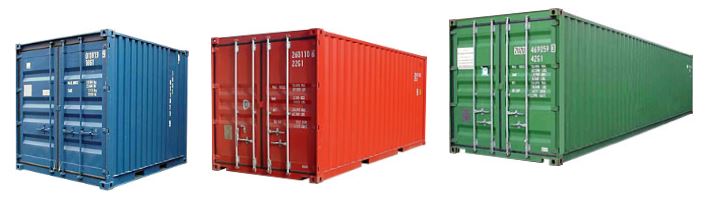
Types of shipping containers

Know your shipping container

Ocean containers of various types: the standard 20-foot container, standard 40 ft container, 40 ft container of high capacity, Open Top and Flat Rack. External and internal dimensions, container door dimensions, capacity and max cargo weight.

Types of Shipping Containers


Types of shipping containers and dimensions

Size Door Openings*
mm
feet/inches
Internal Dimensions*
mm
feet/inches
Volume*
m3
cubic feet
Feet/inches Width Height Length Width Height Capacity
20 standard
20′ X 8′ X 8’6″
2.340
7′ 8″
2.274
7′ 6″
5.896
19′ 4″
2.350
7′ 8″
2.393
7′ 10″
33
1,170
40 standard
40′ X 8′ X 8’6″
2.340
7′ 8″
2.274
7′ 6″
12.032
39′ 6″
2.350
7′ 8″
2.392
7′ 10″
67
2,390
40 High
40′ X 8′ X 9’6″
2.640
7′ 8″
2.577
8′ 6″
12.032
39′ 6″
2.350
7′ 8″
2.697
8′ 10″
76
2,700
45 High
45′ X 8′ X 9’6″
2.340
7′ 8″
2.584
8′ 5″
13.556
44′ 6″
2.347
7′ 8″
2.696
8′ 10″
86
3,055